CONTENTS · 13 CHAPTERS
The letter
On the eighteenth of August, at 10:48 in the morning, we got an email. Forty questions. One deadline — seven days. "How is Lume Studio funded?"[124]
"Can you provide an estimate of the total revenue generated by these channels since their creation?"[124]
"Is it correct that he used a different name on an older VK profile?"[124]
For a moment we thought it was from an agency. Law enforcement, maybe. Then we checked the signature.[123]
A YouTube channel. Five point three million subscribers — more than fifteen times our size. What does a YouTube channel need that for?[3][4]
We're going to answer every one of those questions. But the answers turned out to be the least interesting part of what we found.[123]
Before any of that, we wanted to know one thing.[123]
Who's asking.[123]
Who owns fern
To find the real reason behind that letter — and the film that came after it — we needed one thing. To find out who is behind fern. And they've already said it out loud, in a video about themselves.[5]
 fern"The Truth About fern" (YouTube, 22 Jul 2026) ↗
"And that's when we started talking to Electrify. Their business model is pretty straightforward. Electrify invests in creators, stabilizes their business and takes a bunch of operational tasks off their shoulders." A partner who handles the boring parts. That's the whole description. So we looked the partner up. Everything that follows comes from public company registers. Not social media. Not anyone's holiday photos. These are documents a company is legally required to file, so that people can read them.[5][6]
In Britain that register is called Companies House. It's free, and it takes about thirty seconds. Electrify Video Partners Limited. London. Registered August 2021. Nine YouTube channels have passed through it. Fireship. Simple History. Mentour Pilot. Astrum. Improvement Pill. Fizzy. Veritasium. And fern, which counts as two, because the same founders run the German channel Simplicissimus. About forty million subscribers. One company.[6][15][16][123]
Two million shares. Twenty-four names.[7]
The biggest, thirty-eight percent, belongs to Justin Reizes. Fifteen years at KKR — one of the American firms that buys whole companies, cleans up the numbers and sells them on. They manage close to eight hundred billion dollars.[7][20][21]
Second, thirty percent. And this one isn't a person. A holding company in Luxembourg. Metro Luxco. It belongs to a London investment fund called Capital D. Remember that name. It comes back.[7][10][14]
Third and fourth, twelve percent each. Electrify's two chief executives. One out of KKR, one out of Disney.[7][17][22][23]
Four names. Ninety-three percent of the company.[7]
Now keep scrolling. Past the funds, past the executives. Eventually you reach the people who actually make the videos. Everyone who built these channels — every founder, every face, every voice — owns about two percent between them.[7][130]
And then fern. The two Dutch companies behind it belong to the two men who started the channel. Nought point three one percent each.[7][54][130]
Between them, less than one percent of the company that owns their work.[7][49]
Who owns Electrify
Electrify Video Partners Limited · 8 March 2026
They say the creators keep full editorial control. We have no reason to doubt that, and no document that would let us.[5]
That's who owns it. Owning and running aren't the same thing. Tim Shey joined the board in January 2025 and was named chairman that spring. He didn't work his way up through the company — Capital D put him there. He's the fund's own operating partner.[11][12][13]
Head of Scripted Originals at YouTube. Before that, Director of YouTube Creators and YouTube Spaces — the programmes YouTube built to grow and fund its biggest channels. And before that he co-founded one of the first multi-channel networks on the platform. YouTube bought it in 2011. He owns nought point two one percent. Less than either of the men who made fern — but he chairs the board, and they don't sit on it.[7][9][12]
And one more name — not a shareholder, not on this board. Neil Chugani runs the London office of RedBird. RedBird is the firm that lent Electrify its money. Before RedBird, he was Chief Financial Officer of Google and YouTube for Europe, the Middle East and Africa.[28][29][59][131]
Who is who: people and careers
Justin Reizes
Electrify · co-founder
Career · companies & roles

Morgan Stanley
Investment banking in New York and Houston; private equity at Morgan Stanley Capital Partners in London.
Source ↗
Founding, board & advisory roles

Motive Partners
Since 2021Senior advisor. Advises the leadership team on private equity strategy.
Source ↗
Over 15 years at KKR, including leadership of Australia and New Zealand. Former Electrify chair; 38.1% shareholder.
Ian Shepherd
Electrify · co-founder & co-CEO
Career · companies & roles
The Walt Disney Company
Business development and strategy; worked with creators on building consumer-product businesses.
Source ↗ Source 2 ↗
Turner Broadcasting
Commercial and strategy roles at Turner Broadcasting, later part of WarnerMedia.
Source ↗
Universal Music Group
Commercial roles in music and entertainment, including new-business development and strategy.
Source ↗

Founding, board & advisory roles
- SS
The Social Store
By 2018Founder and CEO. Built consumer-product brands with social-media creators.
Source ↗ - BOC

Media and entertainment background. Works with creator-led businesses at Electrify; 12.4% shareholder.
Owen Maher
Electrify · co-founder & co-CEO
Career · companies & roles

Credit Suisse
Earlier finance and investment experience, recorded by Media Ownership Monitor.
Source ↗
Findex
Head of Strategic Projects, then joint Executive Managing Partner for Specialist Services. Later Executive Managing Partner for Strategy.
Source ↗ Source 2 ↗
Founding, board & advisory roles
- Veritasium
Veritasium
President of the business behind Veritasium, according to Media Ownership Monitor.
Source ↗
Former KKR principal. Connected to the CL & OM Family Trust; its trustee company holds 12.4% of Electrify.
Tim Shey
Electrify · chair / Capital D · operating partner
Career · companies & roles
- Proteus
- NNN
Next New Networks
Co-founder and president; led creative and product development. Acquired by Google in 2011.
Source ↗ 

Founding, board & advisory roles

Co-founded Next New Networks. Held leadership roles at YouTube, including Scripted Originals, and original content at Duolingo. Electrify chair since 2025; 0.21% shareholder.
Neil Chugani
RedBird · operating partner
Career · companies & roles
- PW
Price Waterhouse
Started his professional career at Price Waterhouse, before its merger into PwC.
Source ↗ 



- Discovery

Warner Bros. Discovery / CNN
Group President and CFO, CNN Worldwide and Warner Bros. Discovery Sports.
Source ↗
Founding, board & advisory roles

Media, finance and technology background, including Google, YouTube, BBC, Sky and Warner Bros. Discovery. RedBird is connected to lender RB EVPO Aggregator.
Jean-Marc Jabre
Capital D · partner & co-founder
Career · companies & roles
Morgan Stanley
Investment banking in New York and debt restructuring in London; helped establish the EMEA advisory business.
Source ↗Morgan Stanley
From 2000Morgan Stanley Venture Partners, Menlo Park: early-stage healthcare and technology investing.
Source ↗Morgan Stanley
Head of Europe for Morgan Stanley Private Equity, focused on growth investments and buyouts.
Source ↗
Background in investment banking, private equity and venture capital at Morgan Stanley. Capital D invests in Electrify through Metro Luxco.
Stephan Lobmeyr
Capital D · partner & co-founder
Career · companies & roles

- HMTF
Hicks, Muse, Tate & Furst
Director. Helped establish the European operations and invest the firm’s Europe Fund.
Source ↗ - Change Capital Partners
Founding, board & advisory roles
Six years at BCG and twelve years as a partner at Change Capital Partners. Part of Capital D’s Electrify deal team.
Daryl Cohen
Capital D · partner
Career · companies & roles


Founding, board & advisory roles
Investment background across these firms. Named as part of Capital D’s Electrify deal team.
Claire Margaret Lawley
CL & OM Family Trust · historical control record
Named alongside Owen Maher in historical trust-control filings. A verified employment history was not located in the supplied research.
Jonas Benninghaus
JONBEN B.V. · director
Director since 28 December 2020, according to the research’s Dutch register references. JONBEN holds 6,242 Electrify shares (about 0.31%).
Arthur David Wariboko
BOKO B.V. · director
Director since 28 December 2020. BOKO holds 6,242 Electrify shares (about 0.31%).
None of these people are new to this. They come out of investment funds and out of the corporations that own media, and they're buying YouTube channels with the same playbook they used on everything else. Nobody here is improvising.[123]
Why a fund would want nine channels instead of one is a video in itself, and a creator called GEN already made it — playing the private equity firm himself, to show the maths from the inside.[31]
 GEN"How Private Equity Turns Your Favorite Channels Into Slop" (YouTube, 15 Apr 2026) ↗
"I bought each channel for three to five times its earnings. But after this roll-up into my portfolio, as a whole, this now sells for 12 to 20 times earnings. So without making any of the channels better, just by buying them, putting them under one roof, the valuation is now 20 times more." One channel sells for three to five times what it makes in a year. Nine channels in one company sell for twelve to twenty. Nobody made the videos better. Nobody grew the audience. Nothing changed except the paperwork.[31]
They're in the same box now, and the box is worth four times more than what's inside it.[31][123]
And that isn't us reading between the lines. Capital D calls Electrify an early consolidator of YouTube channels, on its own website. Tim Shey told Forbes he's building the Condé Nast of the creator economy. Condé Nast is the publisher behind Vogue, GQ and The New Yorker. Different covers. One owner. So it isn't a channel. It's a catalogue.[14][25]
So that's what's behind fern now. More than fifty million subscribers. Ninety-three percent of it in four pairs of hands — two men out of KKR, one out of Disney, and a London fund behind a Luxembourg holding company. A chairman who is that fund's own operating partner. A lender whose London office is run by Google's former finance chief for Europe. That's the scale.[7][13][28][123]
And here's ours. This started with three people in Zhytomyr — a city in northern Ukraine, about two hours from Kyiv. You've never heard of it, and there's no reason you should have. We hired people who couldn't do any of it yet, and learned as we went. Today there are thirty of us, spread across the country. Three hundred thousand subscribers. They have five point three million. And on the eighteenth of August, forty questions arrived from them. Seven days to answer.[123][4][124]
The honest answer is, we didn't understand why. This is a channel that spends months on cartels. On Escobar. On pharmaceutical corporations. On the men who ran the Holocaust. And then it spent months on us. We're not a cartel. Nobody died. There's no crime here. We don't even share their audience. YouTube keeps a list of channels similar to ours, based on who actually watches what. fern isn't on it. You don't spend months on someone fifteen times smaller than you. Not unless something makes it worth it.[123][88][108]
 fern"Exposing a $1,900,000,000 Pharma Company" (YouTube, 5 Aug 2026) ↗
 fern"The Hunt for the Holocaust Architect" (YouTube, 11 Jun 2025) ↗
There is an answer to that, and it's on this company's own balance sheet. One line, filed with the British government. It doesn't cover cameras, or offices, or people. It covers how videos get made. We'll come back to what it's worth. But first — the thing they actually accused us of.[45][64][123]
The one example
They said we copy whole videos. And they showed one.[1]
 fern"The Death of Educational Content on YouTube" (YouTube, published 2 Sep 2026) ↗
"...but sometimes they also seem to simply copy and recreate full videos of ours, like this one."[1]
That's our Pentagon video. In the letter they sent us a month earlier, they were more specific.[124]
"We found a video by the channel @Lume-channel published on 20.09.2026 that is a copy of our video 'The Kid Who Hacked the Pentagon (and paid with his life)' published on 22.07.2025. The video even carries the same title. We suspect AI has been used to copy our work." One example. As of the third of September, a hundred and twenty-four videos on this channel alone — more on the other two — and they found one. And presumably the best one. Nobody leads with their weakest evidence.[124][123]
Before we take it apart, one detail.[123]
That letter is dated the eighteenth of August, 2026. It says our video was published on the twentieth of September, 2026.[124]
We published it on the twentieth of September, 2025. A year earlier. The date in the letter hadn't happened yet.[33][124]
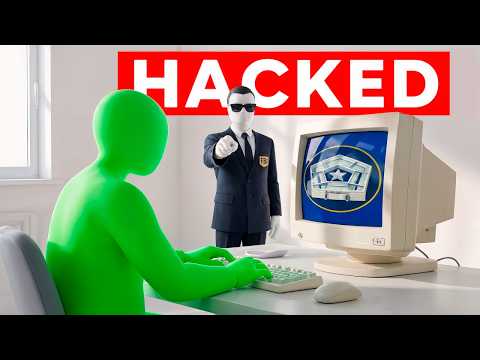 Lume"How a Kid Hacked NASA & Pentagon (and paid with his life)" (YouTube, 20 Sep 2025) ↗
It's a typo. It doesn't change anything. We're pointing at it because this is a document about accuracy, with a seven-day deadline attached, and it went through more than one pair of hands before it was sent.[124]
The film has one too.[1]
"Contrary to some channels on YouTube, our 3D animations are made by humans."[1]
So are ours. Everybody's fingers go through the keyboard sometimes.[123]
Now let's take the rest of it apart, piece by piece.[123]
Start with the part that's true.[123]
Theirs: The Kid Who Hacked the Pentagon (and paid with his life). Ours: How a Kid Hacked NASA & Pentagon (and paid with his life). That bracket is word for word. We're not going to pretend otherwise. Now here's the part that wasn't in the letter.[32][33]
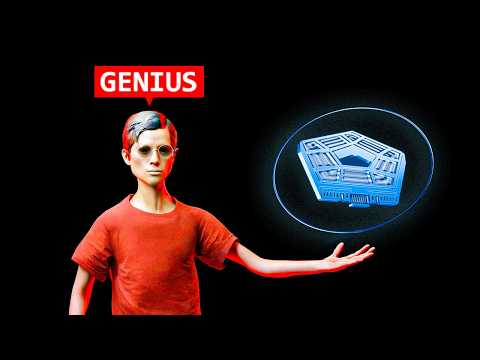 fern"The Kid Who Hacked the Pentagon (and paid with his life)" (YouTube, 22 Jul 2025) ↗
The Kid Who Hacked the Pentagon. A channel called Otw Docs. Published the third of November, 2024. Two hundred and sixty-one days before fern's. The same six words, in the same order.[34]
 Otw Docs"The Kid Who Hacked the Pentagon" (YouTube, 3 Nov 2024) ↗
Otw Docs wrote the sentence. fern added a bracket. We added NASA.[32][33][34]
Then there's the story itself.[123]
The TWS Channel told it in 2022. One point seven million views. November 2024 — Otw Docs, with the title fern would go on to use. July 2025 — fern. September 2025 — us. And nineteen days after us, Simplicissimus. Their own German channel. Five videos, one public story about a boy who is named in court records, in press coverage, and in a letter he left behind in 2008.[32][33][34][35][36]
One story. Five publications.
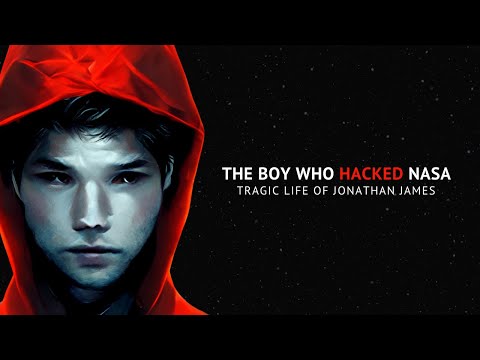 The TWS Channel"The Boy Who Hacked NASA: The Tragic Life of Jonathan James" (YouTube, 5 Sep 2022) ↗
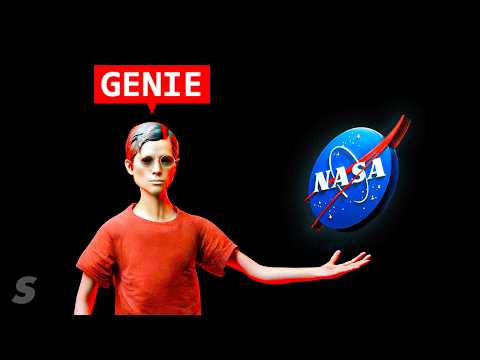 Simplicissimus"Wie dieser Junge die NASA gehackt hat" (YouTube, 9 Oct 2025) ↗
Now the part that decides it. They said the video is a copy. So we ran both scripts through Copyleaks — a commercial plagiarism service. Two files, no account needed. Anyone can repeat this.[127]
Four point seven percent.[127]
Two videos about the same true crime story. The same boy, the same court case, the same suicide note. And ninety-five percent of the words are different. And the four point seven that did match — two quotes. His note, published by Wired in 2009. And a hacker's guide from 1998 that he mentions in it. Both public documents. Both read out in both videos. Take those two quotes away, and the two scripts have nothing left in common.[127]
One thing we'll say plainly, because it wasn't said about the method used on us. We compared the automatic YouTube captions of both videos, not the original scripts. We don't have theirs, and nobody outside their company does. Both transcripts and the full report are in the description. Run it yourself.[127][32][33]
So: the same story, told five times. Their video is theirs. Ours is ours. Same idea, two films — different scripts, different structure, different pictures, made by different people with different tools. We never downloaded a frame of their video. We never touched their files. And nobody has ever said we did. Not in the letter, not in the film. What they said is that they suspect AI was used to copy their work. Suspect.[123][124][1]
A bracket in a title, first written by someone else. A story that was already on this platform three years before they told it. Four point seven percent of a script, and all of it quotation. That was the strongest case they had.[127][34][35]
Which left us with a question. If that's the strongest case, what's the standard here? What actually counts as taking somebody's work? Because there is a standard in that letter. It just got applied in one direction.[123]
The same test, run on them
We took every video on fern's English channel — a hundred and thirty-eight of them. For each one we searched for earlier videos on the same story, by channels with no connection to them. Eight hundred and thirty-two searches. Every date read off the video's own page, not off a search result. Then we went through all hundred and thirty-eight by hand. We did not compare scripts. We did not compare sources. This is titles, topics and dates.[125][123]
A hundred and five of them cover a story that already had a popular video on YouTube before fern got there. Seventy-six percent.[125]
The ancient computer that simply shouldn't exist. Seven words, straight off a BBC Reel video with twelve and a half million views, three years earlier. How Kim Jong Un Travels. Half as Interesting got there four years and nine months first. The Insane Story of Serbia's Human Slaughterhouse. The Organized Crime and Corruption Reporting Project called it the chilling story of Serbia's human slaughterhouse — nineteen months earlier, and their video has twice the views of fern's.[37][38][39][40][41][42]
 fern"The ancient computer that simply shouldn’t exist" (YouTube, 15 Oct 2024) ↗
 BBC Global"Antikythera Mechanism: The ancient ‘computer’ that simply shouldn’t exist – BBC REEL" (YouTube, 28 Jul 2021) ↗
 fern"How Kim Jong Un Travels" (YouTube, 28 Dec 2023) ↗
 Half as Interesting"How Kim Jong-un Travels" (YouTube, 7 Mar 2019) ↗
 fern"The Insane Story of Serbia’s Human Slaughterhouse" (YouTube, 24 May 2026) ↗
 OCCRP"The Chilling Story of Serbia’s Human Slaughterhouse" (YouTube, 25 Oct 2024) ↗
Forty-five of the hundred and thirty-eight carry five or more words of somebody else's title, in the same order.[125]
Thirty-three came back clean.[125]
Breaking news, their own investigations, stories nobody else had told. Those are entirely theirs, and we're showing them because we counted honestly. One of the thirty-three is a video about themselves.[125]
All of it is in the description. A public spreadsheet — all hundred and thirty-eight videos, the earlier video we found for each, both dates, both view counts, and a link to every one. The thirty-three we found nothing for are in there too, marked clean. Not the five that make our point. All of them, including the ones that don't. That's the difference between showing you evidence and showing you a selection.[125]
A hundred and five stories that already existed. Forty-five titles taken from someone else's. Thirty-three that were theirs alone. Every single one of them fine. A title belongs to nobody. A story belongs to nobody. A template belongs to nobody. Not for the BBC, not for OCCRP, not for fern, not for us. Which is exactly why we never sent anyone forty questions about it.[125][123]
138 videos, three verdicts
Which leaves the last thing they asked about. The way it looks.[124]
Yes. At the start we made mannequins, the way they did — stand-ins for the people in a story, so you could see every character without hiring actors. Not the same figures, though. Theirs are matte, and smooth where the face would be. Ours were glossy silver, with the face actually modelled — a nose, eyes, a mouth. We took the idea. We built our own version of it. And they didn't invent that idea either. They've said so themselves:[123][5]
"that we didn't invent most of this. LEMMiNO had been using 3D in brilliant ways in his videos way earlier. So had our friend neo and others." Someone did it first. They saw it and rebuilt it in Blender. We saw it and built ours with generative tools.[5]
Then we moved. And at some point we stopped looking at fern altogether. Most of us play video games. GTA, among others. And the thought was simple: what if there were no mannequins at all? What if the characters had faces? So that's what we built. Not stand-ins for people — people. Documentaries shot like a game that turns into a film. fern has never done that. Nobody had. That one's ours. Or, to put it the way fern would: we stole from Rockstar.[123]
That's the problem with the word. Once you use it for this, it stops meaning anything at all. And to be clear — we were inspired by fern. They make good work. The idea of the figures, the craft standard. We watched their videos and we wanted ours to be that good.[123]
We weren't inspired by the rest of it. Not by the letter with forty questions and a seven-day deadline, sent to a studio a fraction the size. Not by the demand to know how that studio makes its money, who funds it, and what country it's registered in.[124]
That's a method too. It just isn't one we're borrowing.[123]
Take our last twenty videos. Not one of them has the thing they're describing. The accusation is about a style we used at the start, and left behind.[4][123]
So that's the case against us. A bracket in a title. A story five channels told. Four point seven percent of a script, all of it quotation. And a style we stopped using. That's what a hundred people and months of work produced. Which means the reason has to be somewhere else. And it is — it's in the accounts.[123][127][45]
Whose money
So we opened the accounts. Here's what that means, if you've never done it.[45][46]
In Britain, every company has to file its finances every year. How much came in, how much it owes, what it owns. It goes on a government website, it's free, and anyone in the world can download it in about thirty seconds. Electrify has been filing since 2021. We read all of it.[6][45][46][47]
Investors have put in thirty-one point four million dollars since 2021. That money stays. Lenders are owed forty-one point one million. That money has to come back out.[45]
Two sources of funding
Investor capital
Equity contributed since 2021
Debt
Year-end borrowing to be repaid
The company owes more than it was ever given.[45][123]
Then there's what it's worth. And that's a number you can work out yourself. Every time Electrify sold shares, it filed the price. Multiply that by how many shares exist, and you have the value of the whole company.[50][51][52][53][130]
End of 2022 — fifteen million dollars. End of 2023 — about forty. End of 2024 — forty-nine point five. End of 2025 — seventy-four point seven. Five times more in three years.[50][51][52][53][130]
Electrify’s estimated equity value
And here's the part that doesn't fit.[123]
That same company has lost money in each of the last two years. Since it started, it's twelve and a half million dollars down.[45][46]
A business that loses money every year, worth five times more than it was three years ago. Which tells you the price isn't coming from what these channels earn. It's coming from what nine of them, sold together in one package, will fetch on the day somebody buys them.[123][130]
Which raises the obvious question. What did they pay for fern?[123]
Nobody publishes the price of a single channel. But one day after that letter reached us, the biggest creator in that portfolio sat down for an interview. Derek Muller. Veritasium. Twenty-one million subscribers. He was asked, directly, what Electrify paid for his channel.[43]
 Jon Youshaei"The Real Reason Veritasium Sold His Channel" (YouTube, 19 Aug 2026) ↗
"I don't know if I can explain exactly, but it was many years of profit. The way they valued the company was based on how much profit we make in a year. So it's a multiple of that." The interviewer suggests five to ten times earnings — the way small online businesses trade. Muller says that's roughly the zone. But not the high end. He never gives a number. He agrees with somebody else's.[43]
That's how this company prices a channel. Not by what it is. By what it earns in a year, times a number. fern was bought by the same buyer, with the same method, a year later.[43][123]
Then the filings get closer.[48]
The word fern doesn't appear in the British accounts at all. What appears is this: in 2024, a subsidiary called Electrify Video Partners OPS Limited acquired a hundred percent of a Dutch company — A&E Enterprises B.V. A Dutch company, registered in Amsterdam, run by two directors. The same two men who started the channel.[48][49][54]
And a year later, two Dutch companies appear in Electrify's shareholder list. Nought point three one percent each. That's what the founders of fern were paid with. Part of it, anyway.[7][8][130]
That's fern.[49]
The same accounts say what was spent on acquisitions that year. Thirteen point two million dollars — for two companies. fern's parent, and Simple History. They don't split them. Nobody is obliged to.[48]
So the most we can say is this: fern cost less than thirteen point two million. That's a ceiling, not a price. We wrote and asked for the exact figure. No answer came.[48][123]
We could give you a number. We're not going to, because we'd be making it up.[123]
But the borrowing is a different story. That one is on the record in full — and it's the part that changes what all of this is about.[55][59]
The loan, and what was pledged
In September 2025, Electrify borrowed money. A lot of it.[55][59]
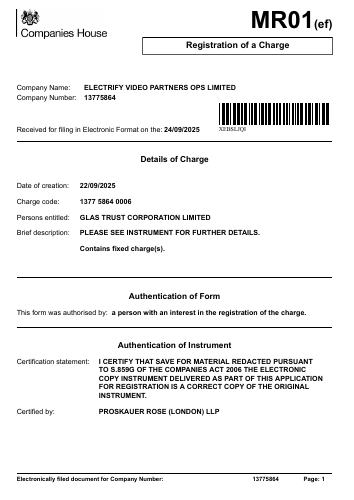
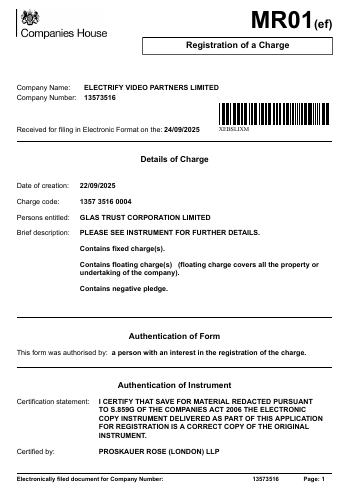
On the twenty-second, five companies in the group signed the same document. It's called a charge, and the idea is simple: you borrow, and if you can't pay it back, the lender takes what's on the list. Everything that follows is that list.[55][57][58][59]
First, who lent it.[123]
The British register names a firm called GLAS. But GLAS isn't the lender. It's a security agent — a company hired to hold the paperwork, so the lender's own name never has to appear. One company in this group is Dutch, though. And the Dutch register doesn't allow that.[55][59][61]
RB EVPO Aggregator. RedBird. Fifteen billion dollars under management, by their own count. And their London office is run by Neil Chugani — who, before this, was Chief Financial Officer of Google and YouTube for Europe, the Middle East and Africa.[27][28][59][131]
The loan is forty-four point seven five million dollars. Their total debt, across everything, is forty-one million. Most of it never goes near a channel. Thirty-two million goes straight back out, to repay the lender before them. The old debt, swapped for a bigger one.[45][59][131]
And it's expensive money.[123]
Interest paid goes from two point nine million dollars to eight point five million in a single year. Against an operating profit of one point one eight million. The rate itself was withheld from the public file. Eight and a half million on roughly thirty-five million of debt works out at about twenty-four percent a year. That calculation is ours. The two numbers are theirs.[45][46][131]
Read the numbers together
| Measure | USD | Basis |
|---|---|---|
| Year-end debt | ≈ $41.1M | [45] |
| Financing principal | $44.75M | [59][131] |
| Interest expense, 2025 | ≈ $8.5M | [45] |
| Operating profit, 2025 | ≈ $1.18M | [45] |
| Author’s expense/debt ratio | ≈ 24% | [45][131] |
None of this was announced anywhere. No press release. No article. Nothing said to forty million subscribers.[123]
And none of it would be our business — except for what's on the list.[123]
Shares in every company in the group. The bank accounts — at Revolut and Citibank — under the lender's control. And the trademarks. The registered names and logos of the channels themselves.[55]
We checked those. Mentour Pilot. Simple History. Improvement Pill. Veritasium. Every one of them registered to a company inside the group. Not to the people who make those channels.[55][62][63]
Then there's one more line, in the registrar's own wording.[56]
A floating charge covering all the property or undertaking of the company. All the property. For a company that owns almost nothing you can drop on your foot — no cameras worth speaking of, no buildings — that means the rights, the names, and the catalogue.[56][45]
And one more line on the list. Every insurance policy the company holds — including, in the document's own words, any present or future key-man policies. Handed to the lender too.[55]
The registered charge
Stephan Lobmeyr of Capital D, to Forbes. On the eighteenth of August, 2026 — the day the letter reached us: "Whatever the creator does — if they get hit by a bus or decide to do something else — we could be very vulnerable to that."[25]
So: forty-one million dollars of debt, secured against the names of the channels and the rights to the videos. Which leaves one question. If that's the collateral — what is it actually worth? They answer that themselves. It's one line in the accounts, and it's the number this whole thing has been leading to.[45][55][64]
Twenty-seven million dollars
So if the names of the channels and the rights to the videos are what secures forty-one million dollars of debt — what are they worth on paper? The company answers that itself.[45][55]
In 2022, everything Electrify physically owned came to zero. No cameras. No computers. No desks.[47]
By 2025: a hundred and eighty thousand dollars of equipment. And fifty-four million dollars of property with no physical form.[45]
One line inside that is worth twenty-seven million, sixty-six thousand, seven hundred and seventy-eight dollars.[45]
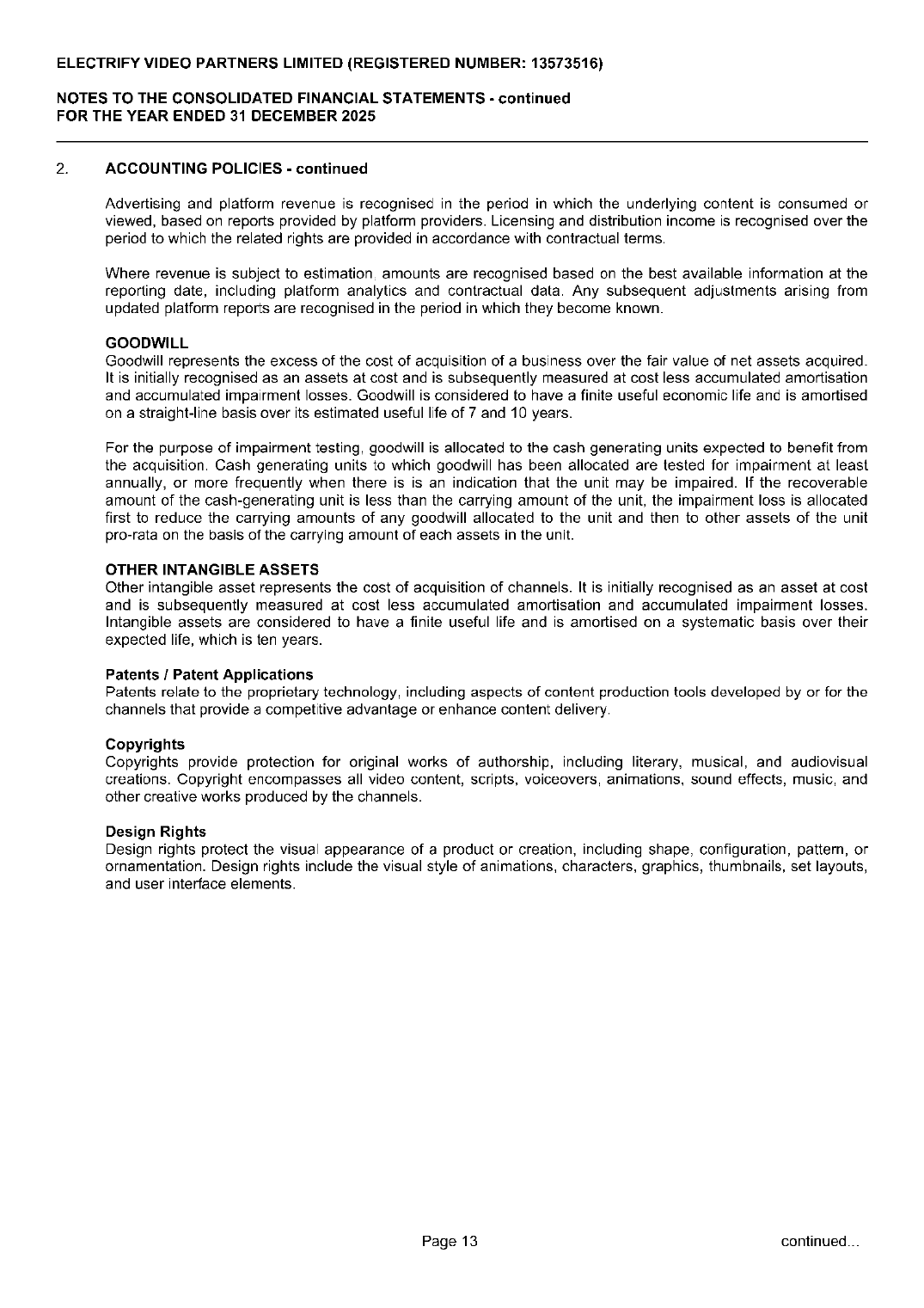
Filed as patents, copyrights and design rights. And page thirteen says what goes in it, in their own words.[64]
Copyrights: all video content, scripts, voiceovers, animations, sound effects, music. Design rights: the visual style of animations, characters, graphics, thumbnails, set layouts, and user interface elements.[64]
What page 13 actually says
Scripts. Voiceovers. Music. The way the animation looks. Thumbnails.[64]
Twenty-seven million dollars. Not for the videos. For how the videos get made.[64][123]
So here are three things, and we're going to leave them next to each other.[123]
A company carrying twenty-seven million dollars of how videos get made on its balance sheet. The same property pledged against a forty-one-million-dollar loan. And in the letter they sent us — question five.[45][55][124]
"How are thumbnails created for your channels?" "Are existing thumbnails from other creators used as inputs, references or training material during this process?"[124]
We're not going to join those three together for you. We don't have a document that does it, and we're not going to pretend we do. They're just all true at the same time.[123]
Inside the $54.1 million
| Category | 31.12.2024 | 31.12.2025 |
|---|---|---|
| Goodwill | $18,561,083 | $25,915,221 |
| Patents, copyrights & design rights | $31,180,460 | $27,066,778 |
| Customer databases & trademarks | $1,326,985 | $1,068,383 |
| Content production | $138,751 | $6,227 |
| Total | $51,207,279 | $54,056,609 |
The thumbnails
"These channels regularly appropriate our thumbnails. They rip them and then likely let AI change or add elements."[1]
Attached to the letter was a sheet. Five of our covers, next to five of theirs. Appropriate. Rip. Those are their words, and they're the wrong ones. We looked at fern's thumbnails and we built our own. Which is exactly what fern did.[124][123]
Sixteenth of January, 2023. A channel called neo. How the CIA Found Osama bin Laden. A corkboard. Red string. A photograph pinned to it. The words MOST WANTED. fern's first one came seven months later. Then eight more, across seventeen months. The same corkboard, the same string, the same pinned photograph.[65][129]
 neo"How the CIA Found Osama bin Laden" (YouTube, 16 Jan 2023) ↗
To be clear, we think that's fine. We're only noting that a corkboard with red string appears to be a remarkably durable idea. And they've said so themselves. Twice.[123]
"Title and Thumbnail for this one are inspired by Riverwand — make sure to check him out!" Riverwand's video came out ten months earlier. Title and thumbnail both. That's the right thing to do. A line in the description, a name, a link. It costs nothing.[66][67]
 fern"How Peter Thiel Is Destroying Democracy" (YouTube, 7 Dec 2025), description ↗
 Riverwand"The Man Behind The American Oligarchy" (YouTube, 14 Feb 2025) ↗
"We actually got the inspiration for the first fern thumbnail from his Bin Laden video, and asked him if he'd be chill with us creating our own version."[5]
They asked neo. We didn't ask them. Sorry, fern. That one's ours.[123]
But the word they use for their own version of this is inspired by. The word they use for ours is appropriate. Same corkboard. Different verb.[1][5][123]
All ten thumbnail comparisons
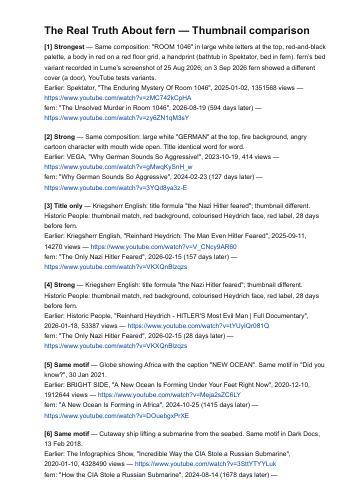
Same composition: "ROOM 1046" in large white letters at the top, red-and-black palette, a body in red on a red floor grid, a handprint (bathtub in Spektator, bed in fern). fern’s bed variant recorded in Lume’s screenshot of 25 Aug 2026; on 3 Sep 2026 fern showed a different cover (a door), YouTube tests variants.
[70][71][126]

Kriegsherr English: title formula "the Nazi Hitler feared"; thumbnail different. Historic People: thumbnail match, red background, colourised Heydrich face, red label, 28 days before fern.
[126]
Kriegsherr English: title formula "the Nazi Hitler feared"; thumbnail different. Historic People: thumbnail match, red background, colourised Heydrich face, red label, 28 days before fern.
[126]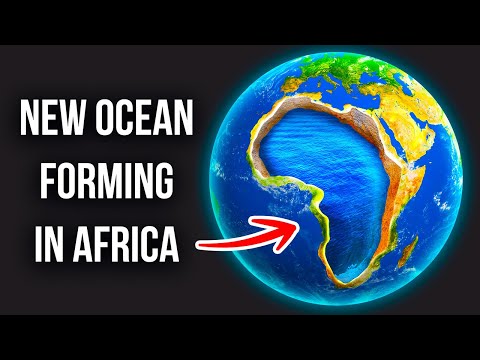
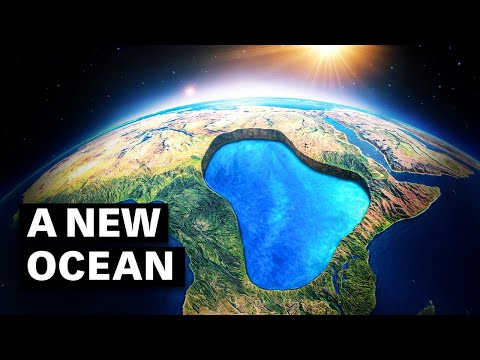
Globe showing Africa with the caption "NEW OCEAN". Same motif in "Did you know?", 30 Jan 2021.
[126]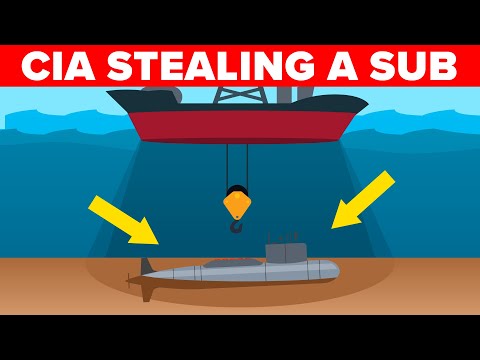
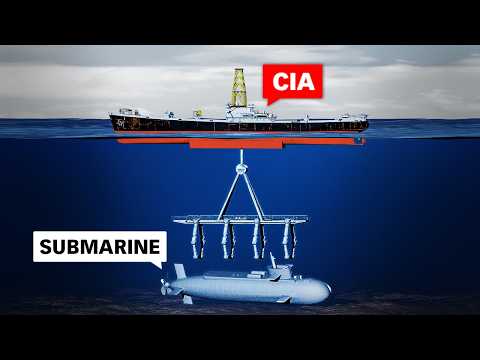
Cutaway ship lifting a submarine from the seabed. Same motif in Dark Docs, 13 Feb 2018.
[126]


So we ran the same check on them. And it's harder than it sounds — a composition travels between subjects, so there's no way to search it properly. All you can do is look at earlier videos on the same story and compare. That's what we did.[126]
VEGA. October 2023. Four hundred and fourteen views. fern. February 2024. A hundred and twenty-seven days later. Both a cartoon character screaming, mouth wide open, against a wall of fire. Both with GERMAN across the top in enormous white capitals, cropped by the frame. And the title is word for word.[68][69][126]
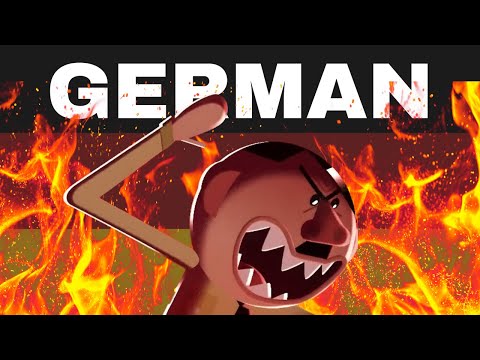 VEGA"Why German Sounds So Aggressive!" (YouTube, 19 Oct 2023), 414 views ↗
 fern"Why German Sounds So Aggressive" (YouTube, 23 Feb 2024) ↗
Four hundred and fourteen views.[68]
Now look at this thumbnail.[126]
A channel called Spektator. A hundred and twenty-three thousand subscribers. Second of January, 2025. Black background. Room number in huge white letters across the top. A body in red. Blood running along a red grid on the floor. A handprint in it. It's a good thumbnail.[70][126]
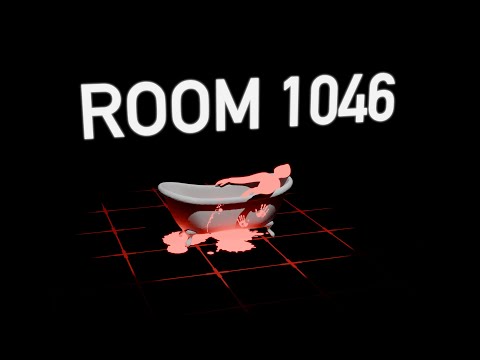 Spektator"The Enduring Mystery Of Room 1046" (YouTube, 2 Jan 2025) ↗
Five point three million subscribers. Five hundred and ninety-four days later. Black background. Room number in huge white letters. A body in red. Blood on a red floor grid. A handprint. The bathtub is a bed.[71][126]
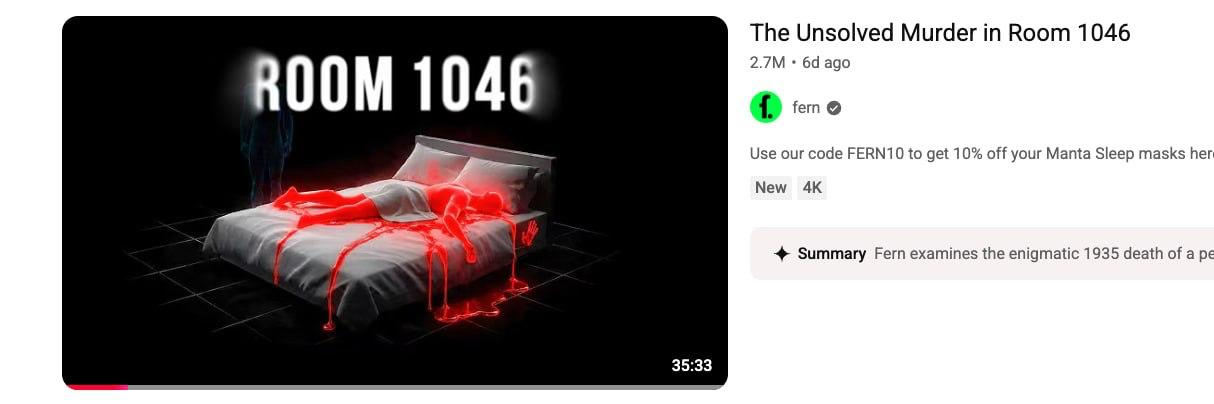 fern"The Unsolved Murder in Room 1046" (YouTube, 19 Aug 2026) ↗
Oops.[123]
Here's the timing. On the eighteenth of August, fern sent us a letter. Question five was: how are thumbnails created for your channels, and do you use other creators' thumbnails as references. The next day — the very next day — they published that.[124][71]
We hadn't even answered them yet.[123]
One thing about that one.[126]
YouTube lets you run several covers on the same video and shows different ones to different people. Everybody does it. We do it. So the cover you saw isn't necessarily the cover somebody else saw, and YouTube doesn't keep the old ones.[123]
This is what that video showed on the twenty-fifth of August. We screenshotted it and recorded it, because covers don't stay.[126]
Now. We're not calling that appropriation. By our standard it isn't. Somebody looked at something and made their own version — which is what everyone here does.[123]
But by the standard in that letter, it is. Take the elements. Change one. Publish. We don't know whether anyone at fern has ever seen that video. We're not saying they did. We're saying that nobody wrote them a letter about it. Which is correct. Nobody should have.[123]
Room 1046: the earlier thumbnail
There's a second sheet in that letter. MrBeast, Hoog, MarkRober. We looked at MrBeast's thumbnails. He saw ours.[124][129]
"Did they literally just swap me on my thumbnail for a red guy and get 1.8M views? What the hell lol" He said lol and got on with his day.[129]
Then there's the actual question they asked.[124]
"Are existing thumbnails from other creators used as inputs, references or training material?" The answer isn't complicated. We have designers. Sometimes they generate an element and build the rest around it. Sometimes they generate a rough version and take it apart in Photoshop until it works. Sometimes there's no generation in it at all. We don't hide from these tools. We use them on purpose, because they're the tools that exist now.[124][123]
And this is how fern described their own process, on camera, in the film about us.[1]
"In rare cases, we use generated imagery as a basis for compositions in Photoshop if no comparable stock images are available."[1]
Generated imagery. As a basis. Finished in Photoshop. That's our process. Word for word.[123]
So here's the question we'd genuinely like answered. A little bit of AI, or a lot of AI.[123]
What exactly is the difference?[123]
Nobody has ever said. There's no number in the letter. There's no number in the film. There's no number in YouTube's rules. There's just a feeling that somebody else used too much.[123][124][1]
But the word in that letter is appropriate. The word in the film was copy. So it's worth working out what that word has meant to everybody who used it before us. Not on YouTube. This argument is older than the platform, older than film, older than photography.[123]
So what is a copy?
Van Gogh painted from Millet. Not from the originals — from black-and-white prints of them. Same figures, same composition. Dozens of times. He wrote to his brother about it, because he knew how it looked. He said it wasn't copying. He said he was translating — taking something that existed in one language and putting it into another. The language of colour.[72][128]
He wasn't hiding it. He was learning, the way everybody learns. Some of those hang in the Van Gogh Museum. Some in the Metropolitan. Nobody calls them copies. They're Van Goghs.[72][128]
One composition, another language
Explore the other three Millet / Van Gogh pairs +
Manet, 1863 — composition from a 16th-century engraving after Raphael Picasso, 1907 — forms from African masks Warhol, 1962 — someone else's photograph of Marilyn Warhol, 1962 — someone else's soup can Warhol, 1964 — someone else's flowers. The photographer sued. Kimba the White Lion, 1965 — The Lion King, 1994. Disney denies it. Thirty years, never settled. Oldboy — manga 1996, Korean film 2003, American remake 2013 Infernal Affairs, 2002 — The Departed, 2006. Best Picture.[73][74][75][76][77][78][79][80]
Art and cinema: the references
Manet / 1863
Picasso / 1907

Warhol / 1962–1964


The Lion King / Kimba


The Departed / Infernal Affairs


Quentin Tarantino took the ending of Reservoir Dogs from a Hong Kong film called City on Fire.[81][128]
The films in the comparison


He took the yellow tracksuit from Bruce Lee.[82][128]
Kill Bill / 2003

He has never hidden either of them. Two Oscars and a Palme d'Or.[128]
And in Hollywood there's a book called Save the Cat. Fifteen mandatory plot points, each tied to a specific page of the screenplay. Which page the hero gets the call. Which page he hits bottom. Thousands of films are written to it. Literally, page by page.[83][128]
Save the Cat!

"How do you respond to concerns that some of your videos closely mirror the titles, structure, storytelling and presentation of existing creators' work?"[124]
Structure. In an industry where structure is printed in a textbook, with page numbers, and taught as a trade.[83][123]
And look at these. Blue and orange. A head in the sky above a landscape. A man walking away from an explosion without looking back. Every studio. Every year. For decades. That's not an accusation. That's the industry. The formula works, so it gets used again. Nobody has ever called it theft.[123]
And every cheap new form gets called garbage first. In 1954 the United States Senate held hearings on whether comic books corrupt children. A psychiatrist testified that they did. Publishers were driven out. Whole genres disappeared. The complaint wasn't only about morals. It was that the stuff was cheap to make, and the market was going there.[84][128]
The controversy around comics

Today they're the biggest thing in cinema. The most successful film studio in the world is built on them.[123]
Nobody starts from an empty place. There is no empty place.[123]
So what was the investigation?
So if everything is built on something else, and always has been — what exactly was this? They called it an investigation. Months of work. A hundred people. A letter with a deadline. An investigation starts with a crime. Someone did something, and someone hid it.[1][5][123]
We've been through what they had. A bracket in a title. A story five channels told. Four point seven percent of a script, all of it quotation. Thumbnails that look like other thumbnails, the way everyone's do. So what's left?[123][127]
That we have a course. Courses are legal. That there's an Instagram with holiday photos. Not a crime. That our channels are connected to each other. Every studio in the world has connected channels.[85][123]
No stolen file. No lawsuit. No copyright claim. No broken platform rule. They call it theft. Industrialised plagiarism. Creative theft. Twenty-eight minutes, and not one file, not one line, not one frame.[1][123]
"Lume Studio also offers a coaching program. Their VIP course costs a casual $1,499."[1]
That's our page. And two buttons. Join waitlist. Join VIP waitlist. There is no course. There has never been a course. Nobody has ever bought one, because there is nothing to buy — that's a landing page, put up to see whether anyone would sign up.[85][123]
So they couldn't buy ours. Nobody can.[123]
Instead they bought a different one. Seventy-five dollars, from a man called Gary. Then another sixty-seven to get into his community. We've never met Gary. He isn't a client, a partner, or an employee. They watched his course, and then they told you how we work.[1][86][87][123]
What was offered. What was purchased.
I couldn't afford the Pepsi. So I bought donkey piss. It tastes bad. Therefore Pepsi tastes bad.[123]
Now count how many times that film says seems.[1]
They seem to generate quite some revenue. That could equate to eleven thousand dollars. He's probably from Ukraine.[1]
And then this went on screen.[1]
Thirty-nine thousand to a hundred and eight thousand dollars.[1]
That's a range of nearly three to one. If someone told you a company earns somewhere between thirty-nine and a hundred and eight thousand, you'd understand immediately that they have no idea. Because they don't. That figure comes from a third-party estimator with no access to anyone's earnings. Not ours. Not fern's. Not anyone's. We're not going to publish our numbers to disprove it. We shouldn't have to. We'll say one thing only: we have never had a month at the bottom of that range.[1][123]
We could have done it their way. Instead we opened their accounts and read what's printed in them.[45]
"Writers working on your channels are expected to produce one script per day, and two writers are responsible for producing content across three channels."[124]
Stop on that sentence. Two people. Every day. Writing scripts.[124]
That's their own source, describing human beings doing work — in a film whose entire argument is that a machine does it instead. They found the humans, and printed it as evidence against us.[123]
And one more thing about that letter, which isn't in any of the forty questions.[124]
On the twenty-second of July, fern published a film about themselves.[5]
"Copies of our 3D thumbnail style would go on to become a defining feature of AI slop content. We'll cover that in a different video soon."[5]
Twenty-seven days later, the questions arrived.[5][124]
You ask for comment to test whether the thing you believe is actually true. That's the entire point of asking. If the conclusion is already published, an answer can't change it.[123]
The person
And then they told everyone who he is.[1]
Not the company. The person. The country. The region in the north of it. The surname he used on an older profile — printed in the letter, in writing. Photographs from his holidays.[1][124]
A lot of people appear in that film. A man selling courses. Another channel they investigated. Two AI companies who never replied. Out of all of them, one private individual was identified by name.[1][123]
Before this, fern investigated a pharmaceutical company that made money from an opioid painkiller. They did not publish where anyone lived. They did not show anyone's holiday photographs. The difference is that a corporation has lawyers.[88][123]
And about those photographs. Look at when they were posted. They predate the channel. Some of them predate the company. They were put on screen next to a revenue estimate, and nothing was said out loud. Nothing had to be. Two images sit beside each other, and the viewer joins them up.[123][89]
Except the dates don't allow it. The money they're pointing at didn't exist yet.[123]
We could show you theirs. Where they go, what they drive, what they earn. We're not going to. It wouldn't prove anything. It didn't prove anything when they did it.[123]
Those started arriving the day the film went up.[90][91][92][93][94][95]
 Lume"The Farm Boy Who Flooded America With Heroin Using Pizzerias" (YouTube, 2 Sep 2026), comments ↗
 Lume"The Man the FBI Hunted for 19 Years" (YouTube, 29 Aug 2026), comment "Mass report is the only way…" ↗
When fern investigates McDonald's, does McDonald's get messages like that? When they investigate a cartel, does the cartel?[123]
A pharmaceutical corporation doesn't have an Instagram account. A cartel doesn't read its comments. We do.[123]
That's under their film. Not ours.[96]
Forty questions. How we're funded. What share of our revenue comes from AI. What country we're registered in. How our thumbnails are made. What our channels have earned since they started. Whether a channel we've never mentioned is a client of ours.[124]
And one about whether the facts in our videos are correct.[124]
If the concern was misinformation, the entire letter would have been that.[123]
But that question was fair. And it's the one we're going to answer properly.[124]
The one fair question
"This video includes several inaccurate claims and visuals about the Holocaust, including a wrong number of how many people died in Auschwitz."[124]
They're right. Three things in that film were wrong.[97][123]
 Lume"The Man Who Escaped Auschwitz Hidden in a Woodpile" (YouTube, 9 Feb 2026) ↗
The first is a number. One million, seven hundred and fifty thousand, standing without the modern figure beside it.[97][98]
It wasn't invented, and it wasn't generated.[123]
It's Rudolf Vrba's count. A prisoner who counted the transports with his own eyes, from inside the camp, where being caught counting would have killed him. He escaped in April 1944 with Alfréd Wetzler to carry that count out. Their report reached the Allies and is credited with saving tens of thousands of lives. Historians working from documents now put it at around one point one million. Both numbers should have been on screen. Ours had one.[98][99]
The second is a shot. Prisoners burning a pile of toys. Their expert said it didn't happen that way, and she's right. Belongings were taken, sorted and stored. Not piled up and burned.[97][123]
That scene was meant to carry grief through an object. It shouldn't have been in a film about Auschwitz. There's no version of that subject where you invent an image, however you mean it.[123]
The third is a line — that nobody had ever escaped Auschwitz to tell the world. That isn't true, and we knew it wasn't. We'd made a film about Witold Pilecki, who went into the camp deliberately and escaped in 1943. What made Vrba and Wetzler different is what they carried out: a report, in time to be acted on. That's what the line should have said.[97][100][101]
 ago."The Man Who Escaped Auschwitz Using the Army He Built Inside" (YouTube, 16 Jan 2026) ↗
We can't change a published video. Nobody can. What we could do is put the corrections underneath it, and we have — all three, with a link to the Auschwitz-Birkenau Memorial.[97][123]
On that film, the fact-checking wasn't good enough. That's ours, and we're not dressing it up. So here's the answer to their question. Two writers. They find their own topics, write their own scripts, and check their own work. When something's uncertain, they ask each other, because there's nobody else to ask. That's the whole process. It's not much.[123]
Our three corrections
Then we asked the same question back.[123]
We watched seventeen of their films and checked what we could against primary sources — and against the source lists they publish under their own videos.[123]
"...one of them flown by Major General Gennadi Osipovich." Osipovich was a major, or a lieutenant colonel, depending on the source. He was never a general. The general in that story is Kornukov, the man who gave the order.[102][104][105][106][107]
 fern"The Soviet Scientist Who Saved the World" (YouTube, 22 Jun 2025) ↗
Their own source thirty-one calls him Major. Their own source twenty-seven, the New York Times, calls him Lieutenant Colonel.[103][104][105]
A journalist. Two editors-in-chief. A third pair of eyes. A fact-checking team. And a general who was never a general got through all of them.[5][102]
To be fair: they fixed it. One line in the description. "Osipovich was only a major, not a major general."[102]
That's fine. That's how it's supposed to work. You get something wrong, somebody notices, you write a line under the video. Everybody makes mistakes. We made three.[123]
So keep going.[123]
And then there's their film about the architect of the Holocaust.[108]
Five million views.[108]
Before anything else — Eichmann organised the deportation of more than one and a half million people to the death camps. A court found that he and the camp commandant jointly decided to use Zyklon B, and that his office ordered the gas. Nobody here is making him smaller than he was.[111][112]
But in forty seconds, that film gives him three things he never did.[108][123]
"He gives the green light to initiate the final solution." "He has the cremation process optimized so that each corpse is reduced to just two handfuls of ash." "He even sets up belt conveyors to speed up the process of removing the bodies from the ovens."[108]
Eichmann didn't give the green light to anything. Hitler decided. Göring signed the authorisation. Heydrich chaired the conference. Himmler gave the orders. Eichmann wrote the minutes and ran the trains.[111][113][114]
Their own source says it in one sentence. At no point in his career was Eichmann a senior decision-maker. That's Yad Vashem. Number eleven in the list under their own video.[109][110]
Two handfuls of ash. No source says that. Not one of the sixty-eight in their list. Not anywhere we could find.[109][123]
And the conveyor belts. There was one conveyor-belt crematorium in the history of the Third Reich. It was a patent application, filed in October 1942. It was never built. "Conveyor belt" is a metaphor Hannah Arendt used for his paperwork. Somebody read the metaphor and built a machine out of it.[115][116][117][123]
A viewer told them all of that under the video. Eleven months ago. Patent, 1942. Never built. Arendt.[118]
No reply. No note in the description. Nothing changed.[108][118]
The claims we checked
| Claim | Record |
|---|---|
| Osipovich: major general | fern added a correction: major.[102][103] |
| Eichmann gives the green light | Yad Vashem: not a senior decision-maker.[109][110] |
| Two handfuls of ash | No supporting source identified by the authors in the published list.[109][123] |
| Conveyor belts | The research distinguishes an unbuilt patent from Arendt’s metaphor.[115][116][117] |
"We still make mistakes, but we try to correct them as best we can."[5]
They do. A pilot's rank: fixed, one line. Three invented facts about the Holocaust, flagged by a viewer eleven months ago: nothing.[102][108][118]
We got three things wrong in a film about Auschwitz. We fixed them the same way. One line under the video.[97]
So the rule is: they're allowed to make mistakes and fix them. We're not.[123]
Interesting logic.[123]
"It's so important to be accurate about this. Holocaust deniers often exploit outdated or imprecise numbers to cast doubt on the Holocaust as a whole."[1]
That's them. About us.[1]
That's seventeen films. There are a hundred and twenty-one we never opened.[123]
And that's not because we didn't want to. We had a letter to answer, a deadline attached to it, and a company to keep running while we did both. The corrections, the registers, the source lists, the transcripts — all of that took every hour we had, and we still only got through seventeen.[123]
So if you want the rest — every video, every date, every number, checked against every source they publish — tell us in the comments. We'll make the second part.[123]
"The main journalist covering the story writes the script under the supervision of an editor-in-chief. Yet another editor-in-chief provides a third pair of eyes, and every video gets a fact check by our dedicated fact-checking team."[5]
A journalist. Two editors-in-chief. A third pair of eyes. A dedicated fact-checking team. A hundred people.[5]
Against two writers who check their own work, and a machine that helps them search. That's the thing this film says is killing documentary.[123]
"...all of this is endangering educational content on YouTube."[1]
Under their video about the night the world nearly ended, a pilot's rank was wrong. They fixed it in the description. Under their video about the Holocaust, Yad Vashem says he was never a decision-maker. In the video, he gives the green light.[102][108][110]
So who exactly is endangering it?[123]
We don't call ourselves journalists. We're a studio. We make videos we hope people want to watch, and we're still learning how. Nobody invested millions in us. We don't owe anyone anything. There's no fund that needs us sold within five years.[123]
But if you do call yourself a journalist, the word comes with a procedure attached. You ask before you conclude — not twenty-seven days after you've published the conclusion. You check what you print — including the date on your own letter. You read your own source list before you put a number on screen. And when a viewer tells you you're wrong, you answer. And you don't publish a private person's home region and his surname when you'd never do that to a corporation.[123][124][5]
Afghanistan was journalism. They say it won four awards. We believe them.[5][121]
 fern"We Investigated China’s Secret Highway" (YouTube, 14 Dec 2025) ↗
This wasn't that.[123]
Although — maybe we've got the standard wrong. Maybe a journalist can put three documents on screen, highlight the lines he needs, and read out one sentence from the rest.[123]
Because that's what happened to our answer.[123]
Why us
They showed our letters. All three of them, on screen.[1]
And they highlighted the parts they wanted.[1]
Here they are without the highlighter.[123]
The first is three sentences. We've never re-uploaded another creator's video. Never used another creator's footage. Never re-used another creator's thumbnail. Our content is made by our own team, from scratch.[123][1]
Everything in this film is that sentence, checked.[123]
The second says AI is a tool, and everything still gets made by hand. Every prompt, every picture, every animation. And it asks why you'd investigate a channel that isn't your competitor.[123][1]
And the third — the one they quoted from — says half of it is fictional and thirty percent is wrong.[123][1]
It also offers a call.[123]
That line didn't make it in.[123][1]
Out of all of it, here's what did.[1]
"Lastly, life is like a boomerang, okay."[1]
Five million people heard that one.[1]
There's a list of what this channel has covered. The hunt for the architect of the Holocaust. A pharmaceutical corporation that made money from opioids. Prison camps in North Korea. An FBI agent inside the Ku Klux Klan. Afghanistan. Journalists in Gaza.[88][108][119][120][121][122]
 fern"Camp 14: The Most Horrible Place in North Korea" (YouTube, 8 Oct 2025) ↗
 fern"How an FBI Agent Infiltrated the KKK" (YouTube, 12 Nov 2025) ↗
 fern"How Israel Kills Journalists" (YouTube, 19 Jun 2026) ↗
That's the work fern is respected for, and most of it deserves to be.[123]
And then a studio fifteen times smaller appears on that list.[3][4]
So here's everything we know, and nothing we don't.[123]
A company that has lost money two years running. Twelve and a half million dollars down since it started. Forty-one million owed, at a rate we calculated at roughly twenty-four percent. Twenty-seven million on its balance sheet for how videos get made. Scripts. Voiceovers. Animation style. Thumbnails. Pledged against that debt, along with the names of the channels.[45][46][55][64]
That number is worth what it says for exactly as long as making videos stays expensive.[123]
We make ours for a few thousand dollars.[123]
We're not going to tell you what that means. We said at the start we wouldn't, and we have no document that would let us. You've seen everything we have. Draw your own line.[123]
A year ago this looked like a cartoon. Today it looks like a frame. A year ago these shots were impossible on our budget. Now they cost a few thousand dollars. That's the whole change. It's the only thing this film is really about.[123]
Cinema was available for a hundred years to people with billions. It's now available to people with time, stubbornness, and a few thousand dollars. Most of what gets made that way will be bad. Most films made for billions are also bad.[123]
This is where our money goes. All of it. We're making films. Not videos about films — films. That's what the channels pay for, and it's why there's nothing left over.[123]
Three people started this in a city you'd never heard of an hour ago. There are thirty of us now. We don't know what this turns into either. We're using it to make the thing we always wanted to make.[123]
And finally — we've got one more thing to say.[123]
And no, it isn't a desk ad.[123]
First: subscribe. Watch what we build next.[123]
And second.[123]
Life is like a boomerang.[123]
This is the boomerang.[123]